Loading....

Author: Louise

Keeping Your Cat Healthy and Happy – More Than Just a Full Bowl!

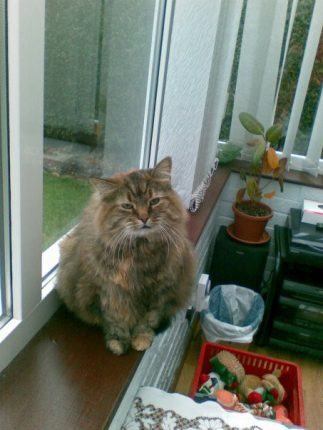
Cats are wonderfully independent creatures, which can sometimes make it easy to assume that they don’t need very much from us. They sleep for hours, groom themselves and, if they have outdoor access, may disappear off on their own adventures.

But even the most independent cat has important physical, mental and social needs. A healthy diet, opportunities to exercise, stimulation and positive interaction with their humans all play an important part in keeping your feline friend happy and healthy.

A healthy diet

Cats are obligate carnivores, which means they need particular nutrients found in animal tissues. PDSA’s veterinary advice recommends choosing a complete cat food appropriate for your cat’s life stage, rather than attempting to make a homemade diet without professional nutritional guidance.

Portion control is important too. Obesity can increase the risk of serious health problems including diabetes and arthritis, so keeping an eye on your cat’s weight and body condition is an important part of looking after them. PDSA recommends regularly monitoring your cat’s weight and speaking to your vet if you are concerned. [PDSA, The best diet for your cat]

Treats are fine in moderation, but they can quickly add calories to a cat’s diet. PDSA recommends that treats make up no more than around 10–15% of a cat’s daily calorie allowance, with the main diet adjusted accordingly. [PDSA, The best diet for your cat]

Cats need exercise too!

It is perfectly normal for a cat to spend a considerable amount of time asleep, but that doesn’t mean they don’t need exercise.

Cats naturally exercise in short bursts, chasing, pouncing and exploring. PDSA suggests that two 15–20 minute play sessions a day can be a useful starting point for cats that need more activity, although every cat is different. Shorter bursts of play throughout the day can also work particularly well. [PDSA, Exercising your cat]

For indoor cats, providing opportunities to climb, scratch, hide and explore becomes especially important. Cat trees, shelves, scratching posts, tunnels and suitable toys can turn an ordinary home into a much more interesting environment.

Let them hunt!

Playing with your cat isn’t simply a way of keeping them occupied. It allows them to express natural hunting behaviours such as stalking, chasing and pouncing.

Interactive toys such as wand toys and toy mice can be particularly useful. Food puzzles and puzzle feeders can also make mealtimes more interesting by encouraging cats to work for some of their food.

The Feline Veterinary Medical Association recommends providing cats with opportunities for play and predatory behaviour, including interactive toys that mimic prey. Cats should also be allowed to catch their ‘prey’ from time to time so that play doesn’t become frustrating. [FelineVMA, Your Cat’s Environmental Needs]

Remember to rotate toys occasionally so that they remain interesting. And never use your fingers or toes as toys – it might seem amusing when they’re tiny kittens, but it isn’t a habit you want to encourage!

Cats need us too

Although cats have a reputation for being independent, positive human interaction is an important part of their wellbeing.

However, cats are individuals. Some love nothing more than curling up on your lap, while others prefer a little interaction followed by some personal space.

The Feline Veterinary Medical Association recommends positive, consistent and predictable human-cat interaction, while emphasising that each cat has individual preferences about being stroked, groomed, played with, picked up or sitting on a person’s lap. The important thing is to respect those preferences rather than forcing interaction. [FelineVMA, Your Cat’s Environmental Needs]

Ilona Rodan, DVM, DABVP (Feline), AdvCertFB and Chair of the FelineVMA Feline Welfare Committee, explains that meeting a cat’s environmental needs is particularly important for indoor cats, whose physical and emotional wellbeing can be affected if those needs aren’t met. [FelineVMA]

A happy cat is an occupied cat

A healthy cat needs more than a bowl of food and somewhere warm to sleep. They need appropriate nutrition, opportunities to exercise, places to explore and scratch, mental stimulation and positive interaction with their humans.

If you are going away, it is also worth remembering that cats generally feel most comfortable in familiar surroundings. Having someone they know visit them at home can provide food, fresh water, litter care, play and companionship without the upheaval of moving them somewhere unfamiliar.

At Paws 4 Walkies, we understand that every cat is different. Some will greet us at the door demanding attention, while others would much rather we quietly get everything sorted before they decide whether we’re worthy of a cuddle!

Whatever their personality, giving cats the right combination of food, exercise, stimulation and companionship can help them stay healthy and content.

Sources: PDSA veterinary advice on feline diet, exercise and weight; Feline Veterinary Medical Association (formerly AAFP) and International Society of Feline Medicine guidance on feline environmental needs; Ilona Rodan, DVM, DABVP (Feline), AdvCertFB, FelineVMA Feline Welfare Committee.
Healthy Exercise for Your Dog – It’s About More Than Just a Walk!

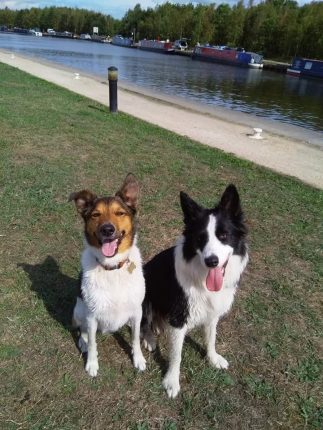
We all know that dogs love going for walks, and here at Paws 4 Walkies we certainly see plenty of wagging tails when it’s time to get out and about! But regular exercise is about much more than simply tiring your dog out. The right amount and type of exercise can help your dog maintain a healthy weight, support their physical health and provide important mental stimulation too.

How much exercise does a dog need?

There isn’t one magic number of minutes that is right for every dog. Exercise requirements vary according to breed, age, fitness, personality and health.

PDSA advises that most dogs should have at least one or two walks every day, although some breeds, particularly working breeds, may need considerably more. A slow walk allowing your dog plenty of time to sniff and explore can be just as valuable in a different way to a brisk walk because sniffing provides mental stimulation as well as physical activity. [PDSA, Exercising your dog]

It is therefore important to think about the individual dog rather than simply comparing them with another dog of a similar size. A young, energetic working breed may need considerably more activity than an older dog, while a dog with arthritis, heart disease or breathing difficulties may need a carefully managed exercise programme.

If you are unsure what is appropriate for your dog, your vet is the best person to advise you.

Exercise should be built up gradually

If your dog is not accustomed to lots of exercise, suddenly increasing the length or intensity of their walks isn’t a good idea. This is particularly important with puppies, older dogs and dogs that are overweight or have existing health problems.

PDSA recommends building exercise up gradually and considering activities that exercise both the body and the brain. Training games, retrieving games, scent activities and appropriate toys can all provide useful stimulation alongside walking. [PDSA, Exercising your dog and Vet Q&A]

A good walk isn’t necessarily one where your dog comes home completely exhausted. In fact, learning to enjoy a calm, varied walk with plenty of opportunities to sniff, explore and investigate can be extremely beneficial.

Don’t forget the weather!

One of the most important things to consider when exercising your dog is the temperature.

Research from the Royal Veterinary College (RVC) found that exercise was responsible for 74% of recorded cases of heatstroke in dogs in one large UK study. Dogs can therefore overheat through exertion, even when the weather doesn’t initially appear particularly hot. [Royal Veterinary College, VetCompass research]

Dr Dan O’Neill, Associate Professor in Companion Animal Epidemiology at the Royal Veterinary College, advises that if a dog is panting excessively, having difficulty breathing, or becomes unwilling or unable to continue exercising in warm weather, exercise should be stopped, the dog moved into shade and cooled with water, with veterinary advice sought.

The RVC also recommends restricting exercise on warm days, walking during cooler parts of the day and taking water with you. Hot pavements can burn paws too, so always consider the surface as well as the air temperature. [Royal Veterinary College, Heatstroke in dogs and cats]

Some dogs need extra care

Flat-faced breeds such as French Bulldogs, Pugs and Bulldogs can be particularly vulnerable to breathing difficulties and overheating. Noisy breathing during rest or light exercise should not simply be regarded as normal for these dogs.

Dr Dan O’Neill, Associate Professor in Companion Animal Epidemiology at the RVC and Chair of the UK Brachycephalic Working Group, stresses that noisy breathing at rest or during light exercise is not healthy and that owners should take particular care with exercise and warm weather. [Royal Veterinary College]

If your dog is older, overweight, recovering from illness or simply not used to much exercise, speak to your vet before introducing a significant change to their routine.

Happy, healthy walkies!

Exercise should be enjoyable for both you and your dog. Varying your walks, allowing time for sniffing and exploring, introducing suitable games and keeping an eye on your dog’s behaviour can make exercise much more rewarding.

At Paws 4 Walkies, we take care to choose walks that are appropriate for the dogs in our care, considering factors such as size, stamina and temperament. We believe that a good walk isn’t about seeing how far or how fast we can go – it’s about giving your dog an enjoyable, safe and stimulating experience.

And, of course, there is nothing quite like a happy, tired dog coming home after a good day out!

Sources: PDSA, Exercising your dog; PDSA, Vet Q&A: How can I make sure my dog is safe and secure?; Royal Veterinary College VetCompass research on heatstroke; Royal Veterinary College, Heatstroke in dogs and cats; Royal Veterinary College and UK Brachycephalic Working Group guidance.

How to help your dog after lockdown

At Paws 4 walkies we hope that you are coping during these difficult times and wanted to give advice regarding how you can help your dog before you return to work following lockdown.

Your dog may have got used to you being at home more or perhaps had a change of routine even if you have continued to work.  It is important that you introduce a change gradually to avoid problems such as separation anxiety.  Here’s a few tips to avoid having a stressed out pooch when you can no longer be there as much as during previous weeks and months.

Gradually change your dog’s routine back to how it was before lockdown before you have to return to work.  Consider time of day, length, location and frequency of walks, This will avoid any anxiety when the routine is switched suddenly.

Your dog may have got used to you being around more and receiving more attention that normal and to just suddenly then leave your dog and return to work may leave your dog to feel abandoned.  Gradually decrease the amount of time you spend with your dog and increase the amount of time they spend on their own, perhaps leaving them in a different room with a chew or toys.

Aim to keep the time that you spend with your dog as close to the normal time you would be with him/her when your routine returns to how it was before lockdown.  It may be a good idea to leave the house without them so they get used to being alone again.

If you plan to have someone else walk your dog when you return to work, help your dog to get reacquainted with this person before you return to work and make yourself available at home in case there are any issues.

Dr Samantha Gaines, Dog Welfare Expert for the RSPCA states

“Always introduce changes gradually and in a positive way, using only positive, reward-based training. And if you have any concerns about how your dog will cope, it is always best to seek advice from a qualified behaviourist who can support you throughout the changes.”

Paws 4 walkies hope that the transition back to work is a smooth one for yourself and your furry friend!

Be careful what your dog eats!

Be careful what they eat!

It’s always important not to go overboard with treats no matter how tempting it seems! Some foods though are downright dangerous to dogs – we’ve listed some of the worst ones below.

1. Chocolate

Chocolate contains a stimulant called theobromine which is poisonous to dogs.  This affects the central nervous system, guts, kidneys and heart and signs of poisoning can occur between 24-48 hours after consumption of chocolate.  Signs of poisoning include diarrhoea, vomiting and restlessness.

2. Caffeine

Because caffeine is similar to chocolate in that it is a stimulant, dogs can be poisoned by tea and coffee.  In small amounts, it is unlikely to have any effect, however it would be dangerous if your dog swallowed a handful of coffee beans or numerous tea bags.  Signs of poisoning are similar to those above for chocolate.

3. Alcohol

Even small amounts of alcohol consumed by your dog can lead to diarrhoea, vomiting, difficulty breaking and blood changes.

4. Onions, leaks, garlic, and chives

Eating any of these can irritate the gut and potentially result in red blood cell damage and anaemia.

The effects may not be immediate and signs of poisoning can occur a few days later.  Also look out for onions found in left over pizza, takeaways and gravy.

5. Macadamia nuts

Dogs can experience depression, tremor, vomiting and increased body temperature within 12 hours of ingestion.

6. Xylitol

This is an artificial sweetener found in foods such as sugar free gums and diet foods.   It leads to insulin release which in turn can result in potentially fatal hypoglycaemia (lowered sugar levels).

Even small quantities can cause toxicity and symptoms include vomiting, loss of coordination and possible seizures and urgent veterinary advice should be sought if you think your dog has ingested xylitol.

7. Mouldy foods

Because mouldy food contains lots of toxins, be careful to dispose of leftover food carefully and ensure your dog cannot access the dustbin.

Bottom of Form

8. Yeast dough

As the dough rises, gas accumulates in the digestive system which as well as being painful, can also cause a blockage in the stomach or intestines.  Small amounts of bread can be given as a treat but you must never give your dog yeast dough.

9. Bones

Dogs can choke on bones, damage teeth while chewing them or bone splinters can puncture the digestive tract.  If you do wish to give your dog bones, avoid cooked bones which splinter more easily and chicken bones should definitely be avoided.

10. Corn on the cob

Corn on the cob does not digest wel and can therefore cause intestinal blockages.  Warning signs are vomiting, diarrhoea and abdominal discomfort.

11. Grapes & raisins

Toxins in grapes and raisins can lead to kidney failure and dogs who already have health problems are at greater risk.  Also be aware of foods which contains grapes and raisins such as mince pies and hot cross buns.

Bottom of Form

12. Milk

Dogs do not have adequate amounts of the enzyme lactase that breaks down lactose in milk and therefore ingesting milk or milk based products can upset the digestive system.

13. Blue cheese

Again, dogs find it difficult to break down the lactose in cheese and eating large amounts of higher fat varieties can cause sickness and diarrhoea.

Blue cheeses, such as stilton and roquefort, are particularly dangerous and many contain a substance called roquefortine C which can cause vomiting and diarrhoea.  Signs of poisoning include twitching, seizures and a high temperature if eaten in large doses.

Happy New Year from Daisy the Cavapoo

Happy New Year from Daisy the Cavapoo

Hello and Happy New Year to all you hoomans and fur babies! Hope you had a
woof-erly time – I did. Look at all these pressies! Ok, so they weren’t all for me
but a dog can dream! Now where’s that bone!?

Let me introduce myself. I’m Daisy the cavapoo and proud member of the
Paws 4 walkies pack. Here’s me doing what I do best – relaxing on the sofa.
I’ve had pawsome walks, met lots of fun-loving friends and had so many adventures.

My Paws 4 walkies ex-paw-rience began in May when my hoomans decided to go on holiday without me! Hmm! To be fair, I’ve heard all that foreign food would not be so good on my delicate tum. So…what to do? Book my own paw-liday of course at a home from home accommodation where I can even still have my own place on the sofa. Pawfect! Here’s my friend Frankie and I relaxing on the sofa with some pup-corn watching our favourite programme!

I had lots of fur-ends to play with whilst on my paw-liday.  Here’s me with Kia and George.

All in all, every day was different and the fun really did never end.  We had plenty of walks by the river and lakes.  I love water.  I’m always trying to jump into the bubble bath at home.   Ooo speaking of which, check out my video ‘Bubblicious fun’ on the facebook page.  I’ve always wanted to star in my own film.  Perhaps it’s never too late to start my career in Paw-lywood!

Wherever we are, we are always followed by the pup-arazzi who can keep your hoomans up to date with photos of your adventures.  After all, why should they be having all the fun!

Bark at your hooman to take the op-paw-tunity and get on the dog and bone, join in the pack and raise the woof, book your place on walkies today!

Hope to see you all  soon!

Love Daisy x

Back To Top