

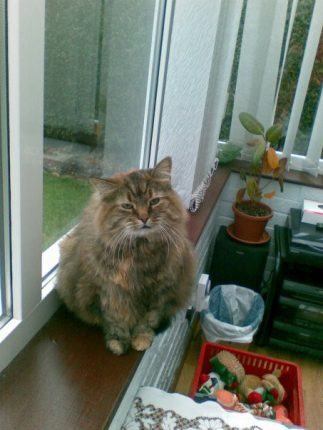
Cats are wonderfully independent creatures, which can sometimes make it easy to assume that they don’t need very much from us. They sleep for hours, groom themselves and, if they have outdoor access, may disappear off on their own adventures.
But even the most independent cat has important physical, mental and social needs. A healthy diet, opportunities to exercise, stimulation and positive interaction with their humans all play an important part in keeping your feline friend happy and healthy.
A healthy diet
Cats are obligate carnivores, which means they need particular nutrients found in animal tissues. PDSA’s veterinary advice recommends choosing a complete cat food appropriate for your cat’s life stage, rather than attempting to make a homemade diet without professional nutritional guidance.
Portion control is important too. Obesity can increase the risk of serious health problems including diabetes and arthritis, so keeping an eye on your cat’s weight and body condition is an important part of looking after them. PDSA recommends regularly monitoring your cat’s weight and speaking to your vet if you are concerned. [PDSA, The best diet for your cat]
Treats are fine in moderation, but they can quickly add calories to a cat’s diet. PDSA recommends that treats make up no more than around 10–15% of a cat’s daily calorie allowance, with the main diet adjusted accordingly. [PDSA, The best diet for your cat]
Cats need exercise too!
It is perfectly normal for a cat to spend a considerable amount of time asleep, but that doesn’t mean they don’t need exercise.
Cats naturally exercise in short bursts, chasing, pouncing and exploring. PDSA suggests that two 15–20 minute play sessions a day can be a useful starting point for cats that need more activity, although every cat is different. Shorter bursts of play throughout the day can also work particularly well. [PDSA, Exercising your cat]
For indoor cats, providing opportunities to climb, scratch, hide and explore becomes especially important. Cat trees, shelves, scratching posts, tunnels and suitable toys can turn an ordinary home into a much more interesting environment.
Let them hunt!
Playing with your cat isn’t simply a way of keeping them occupied. It allows them to express natural hunting behaviours such as stalking, chasing and pouncing.
Interactive toys such as wand toys and toy mice can be particularly useful. Food puzzles and puzzle feeders can also make mealtimes more interesting by encouraging cats to work for some of their food.
The Feline Veterinary Medical Association recommends providing cats with opportunities for play and predatory behaviour, including interactive toys that mimic prey. Cats should also be allowed to catch their ‘prey’ from time to time so that play doesn’t become frustrating. [FelineVMA, Your Cat’s Environmental Needs]
Remember to rotate toys occasionally so that they remain interesting. And never use your fingers or toes as toys – it might seem amusing when they’re tiny kittens, but it isn’t a habit you want to encourage!
Cats need us too
Although cats have a reputation for being independent, positive human interaction is an important part of their wellbeing.
However, cats are individuals. Some love nothing more than curling up on your lap, while others prefer a little interaction followed by some personal space.
The Feline Veterinary Medical Association recommends positive, consistent and predictable human-cat interaction, while emphasising that each cat has individual preferences about being stroked, groomed, played with, picked up or sitting on a person’s lap. The important thing is to respect those preferences rather than forcing interaction. [FelineVMA, Your Cat’s Environmental Needs]
Ilona Rodan, DVM, DABVP (Feline), AdvCertFB and Chair of the FelineVMA Feline Welfare Committee, explains that meeting a cat’s environmental needs is particularly important for indoor cats, whose physical and emotional wellbeing can be affected if those needs aren’t met. [FelineVMA]
A happy cat is an occupied cat
A healthy cat needs more than a bowl of food and somewhere warm to sleep. They need appropriate nutrition, opportunities to exercise, places to explore and scratch, mental stimulation and positive interaction with their humans.
If you are going away, it is also worth remembering that cats generally feel most comfortable in familiar surroundings. Having someone they know visit them at home can provide food, fresh water, litter care, play and companionship without the upheaval of moving them somewhere unfamiliar.
At Paws 4 Walkies, we understand that every cat is different. Some will greet us at the door demanding attention, while others would much rather we quietly get everything sorted before they decide whether we’re worthy of a cuddle!
Whatever their personality, giving cats the right combination of food, exercise, stimulation and companionship can help them stay healthy and content.
Sources: PDSA veterinary advice on feline diet, exercise and weight; Feline Veterinary Medical Association (formerly AAFP) and International Society of Feline Medicine guidance on feline environmental needs; Ilona Rodan, DVM, DABVP (Feline), AdvCertFB, FelineVMA Feline Welfare Committee.