

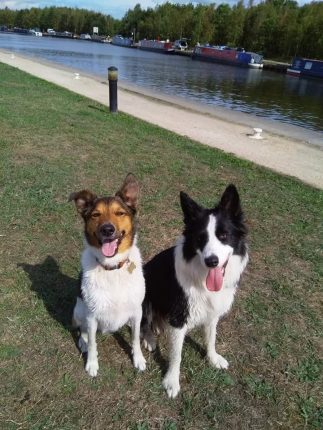
We all know that dogs love going for walks, and here at Paws 4 Walkies we certainly see plenty of wagging tails when it’s time to get out and about! But regular exercise is about much more than simply tiring your dog out. The right amount and type of exercise can help your dog maintain a healthy weight, support their physical health and provide important mental stimulation too.
How much exercise does a dog need?
There isn’t one magic number of minutes that is right for every dog. Exercise requirements vary according to breed, age, fitness, personality and health.
PDSA advises that most dogs should have at least one or two walks every day, although some breeds, particularly working breeds, may need considerably more. A slow walk allowing your dog plenty of time to sniff and explore can be just as valuable in a different way to a brisk walk because sniffing provides mental stimulation as well as physical activity. [PDSA, Exercising your dog]
It is therefore important to think about the individual dog rather than simply comparing them with another dog of a similar size. A young, energetic working breed may need considerably more activity than an older dog, while a dog with arthritis, heart disease or breathing difficulties may need a carefully managed exercise programme.
If you are unsure what is appropriate for your dog, your vet is the best person to advise you.
Exercise should be built up gradually
If your dog is not accustomed to lots of exercise, suddenly increasing the length or intensity of their walks isn’t a good idea. This is particularly important with puppies, older dogs and dogs that are overweight or have existing health problems.
PDSA recommends building exercise up gradually and considering activities that exercise both the body and the brain. Training games, retrieving games, scent activities and appropriate toys can all provide useful stimulation alongside walking. [PDSA, Exercising your dog and Vet Q&A]
A good walk isn’t necessarily one where your dog comes home completely exhausted. In fact, learning to enjoy a calm, varied walk with plenty of opportunities to sniff, explore and investigate can be extremely beneficial.
Don’t forget the weather!
One of the most important things to consider when exercising your dog is the temperature.
Research from the Royal Veterinary College (RVC) found that exercise was responsible for 74% of recorded cases of heatstroke in dogs in one large UK study. Dogs can therefore overheat through exertion, even when the weather doesn’t initially appear particularly hot. [Royal Veterinary College, VetCompass research]
Dr Dan O’Neill, Associate Professor in Companion Animal Epidemiology at the Royal Veterinary College, advises that if a dog is panting excessively, having difficulty breathing, or becomes unwilling or unable to continue exercising in warm weather, exercise should be stopped, the dog moved into shade and cooled with water, with veterinary advice sought.
The RVC also recommends restricting exercise on warm days, walking during cooler parts of the day and taking water with you. Hot pavements can burn paws too, so always consider the surface as well as the air temperature. [Royal Veterinary College, Heatstroke in dogs and cats]
Some dogs need extra care
Flat-faced breeds such as French Bulldogs, Pugs and Bulldogs can be particularly vulnerable to breathing difficulties and overheating. Noisy breathing during rest or light exercise should not simply be regarded as normal for these dogs.
Dr Dan O’Neill, Associate Professor in Companion Animal Epidemiology at the RVC and Chair of the UK Brachycephalic Working Group, stresses that noisy breathing at rest or during light exercise is not healthy and that owners should take particular care with exercise and warm weather. [Royal Veterinary College]
If your dog is older, overweight, recovering from illness or simply not used to much exercise, speak to your vet before introducing a significant change to their routine.
Happy, healthy walkies!
Exercise should be enjoyable for both you and your dog. Varying your walks, allowing time for sniffing and exploring, introducing suitable games and keeping an eye on your dog’s behaviour can make exercise much more rewarding.
At Paws 4 Walkies, we take care to choose walks that are appropriate for the dogs in our care, considering factors such as size, stamina and temperament. We believe that a good walk isn’t about seeing how far or how fast we can go – it’s about giving your dog an enjoyable, safe and stimulating experience.
And, of course, there is nothing quite like a happy, tired dog coming home after a good day out!
Sources: PDSA, Exercising your dog; PDSA, Vet Q&A: How can I make sure my dog is safe and secure?; Royal Veterinary College VetCompass research on heatstroke; Royal Veterinary College, Heatstroke in dogs and cats; Royal Veterinary College and UK Brachycephalic Working Group guidance.